Tuesday, April 13, 2010

WP3: Guidelines

Option 1:

For your final writing project, you will be required to write a rhetorical analysis of the sculpture you were assigned. The specific requirements for this analysis are the same as WP1 and WP2, so please re-read over those project guidelines for a refresher as to what needs to be accomplished so as to produced a proper WP3. Obviously, the key difference between the final project and the previous projects is the primary text. To this extent, ask yourself: what visual, tactile, and contextual elements does your sculpture, and the art-form of sculpture in general, evince that art-forms such as photography and comics do not? For example, choice of materials and the space of presentation are two noticeable differences; of course, these are not the only aspects that differ, but it is a good place to start (you will be expected to generate additional avenues of inquiry, so do not limit yourself to the two I provided).

Furthermore, there will be a new point distribution as well. Your Statement of Purpose and Author's Note will both count toward your weekly blog posts, leaving the WP3 grade to parse out as follows:

Attribution of Points (20 total):

Peer-Reviews: 4 points
Final Draft: 16 points

As with previous projects, the minimum requirements for WP3 are 1200-1500 words, 5 multi-media elements, and 7 relevant hyperlinks. DUE: Tuesday, April 27th @ 11:00AM.

Option 2:

You will write a 1000 word letter addressed to your sculpture. In the letter, you will need to write a) descriptive observations about the sculpture, b) reflections, meditations, and insights that the aforementioned observations stimulate, and c) filter both the observations and reflections through a specific aesthetic-conceptual paradigm (i.e. negativity or intensification). It may also be beneficial to incorporate some contextual material regarding the piece.

The second portion of the assignment will require you to a) read the letter out loud to your sculpture, then after the reading b) imitate your sculpture for 5 minutes. The imitation necessitates that you strike a pose similar to your sculpture and, as motionless as possible, remain that way for the full 5 minutes. When you have completed these steps, thank your sculpture and give it a hug.

If you would like to go with Option 2, speak with me to schedule a specific time during finals week for your reading and imitation. Scheduling a time for this performance is not optional.

Attribution of Points (20 total):

Peer-Reviews: 4 points
Performance: 6 points
Final Draft: 10 points


Before the reading/imitation, you will post a version of the letter onto your blog; in addition to the word count, it will contain 3 multi-media elements, and 4 relevant hyperlinks. DUE: Tuesday, April 27th @ 11:00AM.

UPDATE: 04.13.10

For your third pre-writing assignment, I would like you to write another, brief analysis of your sculpture, using rhetorical appeals, strategies, concepts, and terms that you did not cover in your previous analysis. Perhaps in your first analysis, you did not cover choice of materials. To wit, ask yourself: "If my sculpture is made of bronze, how does that rhetorically affect the audience?" Likewise: "What physical, chemical, and visually properties does bronze consists of? How do those properties alter within particular contexts (such as environmental conditions)? And how can these properties be considered rhetorically?" Posts must be 300-500 words, contain two hyperlinks, and 1 multi-media element. DUE: Thursday, April 15th @ 11:00AM.

For your fourth pre-writing assignment, I would like you to do some research on the historical and aesthetic context of your sculpture. DO NOT limit your research to background information on the artist who created the piece. While some of this informationm may be pertinent, art-objects, even moreso than the texts we have studied heretofore, tend to escape the control (i.e. purpose) of the creator's original intent, due in large part to the fundamental nature of what constitutes art. Attempt to pursue contexts that both support and challenge your understanding of the piece. Posts must be 300-500 words, contain two hyperlinks, and 1 multi-media element. DUE: Sunday, April 18th @ 11:00AM.

Finally, your statement of purpose for this project will be DUE on Tuesday, April 20th @ 11:00AM. Keep in mind that most of you will not be writing rhetorical analysis, per se, but letters to your sculptures with corresponding performances. You will want to consider this when writing this document, as your purpose will be different for this assignment. SoP should be 500-600 words, include 3 relevant hyperlinks, and two multimedia elements.

Also, here is a link to photographs of some of your sculptures. Please read the directions on how to properly capture these images. I believe 12 of you have one image here. I will take photographs your the other four today and send them to you tonight. Furthermore, I will send additional photographs to each of you so yhou can have additional images in your final project.

Tuesday, April 6, 2010

UPDATE: 06 April 2010

Since I will be at the AWP conference in Denver, CO, Thursday's class session will be canceled. In lieu of meeting at our regularly scheduled time period, I would like you all to re-visit your sculpture sometime before next Tuesday and commune with it, writing your ruminations, analysis, sketches, etc. in your notebook. Next Tuesday, we will meet in front of the Sheldon Art Museum and continue to observe and reflect upon the outdoor sculpture that will be your primary text for WP3. Your assignments are as follows:

Sarah: SANDY in Defined Space; Hannah: Woman Lying Down (II); Ellie: Fragment X-O; Joey: Variable Wedge; Nina: Torso; Ben S: Superstructure on 4; Ben H: Serenity; John: Story; Jamie: Daimaru XV; Cara: Birth of Venus; Amberley: Pieta; James: Bather; Bryan: Fallen Dreamer; Blake: Arch Falls; Kelli: Arietta II; Erin: Stairway Balusters. So that you may locate your primary source easier, here is a map of the sculpture garden.

For your first pre-writing assignment for WP3, you will need to write a 300-500 post on your previous experience with art-objects (you may interpret this as liberally as you would like). If you don't have any, or have very limited experience, you might want to address reasons for this absence, or apprehensions you might have with regard to writing a rhetorical analysis about an art-object. In addition to the word count, you will need to incorporate 1 multi-media element and 2 relevant hyperlinks. DUE: Thursday, April 8th @ 11:00AM.

For your second pre-writing assignment for WP3, you will need to write a 500 word, cursory analysis of your sculpture, recording any salient information about it. Specifically, what rhetorical techniques, strategies, concepts, and appeals do you think the art-object evinces? Look through chapter 9 in CDA if you feel that you need a refresher on some of the rhetorical terminology we use for visual compositions. DUE: Tuesday, April 13th @ 11:00AM.

Tuesday, March 30, 2010

WP2: Peer-Review Questions

Introduction: Does the author develop a specific context that situates the comic historically, culturally, aesthetically, etc? Does the author clearly state her/his argument? In other words, does the author articulate the argument the comic fosters and briefly outline the rhetorical techniques/appeals that aid in its transmission? Are the context and the argument commiserate? Stated differently, does the context the author presents clearly and directly relate to the stated argument? What questions do you still have about the context, argument, or their mutual relationship? Suggest alternative approaches for the introduction. Also, does the introduction account for the manner in which the genre complicates, situates, or aides in the construction of the argument?

Body: Does the author address all the rhetorical techniques/appeals (s)he addresses in the introduction's argument? Are their any (s)he doesn't mention, but employs within the body? Given the comic the author selected, are these the most important concepts for her/him to be focusing on? Or stated differently, do the rhetorical concepts addressed by the author directly related to the argument the comic constructs? What rhetorical terms are not addressed? Should they be? Does the author provide specific examples from the text to support their claims? Provide alternative approaches for the author's analysis; specifically, offer suggestions as to where different concepts can be employed using evidence from the text for support. Are the transitions between ideas and concepts fluid and do they relate to one another in an evident manner?

Conclusion: Does the author address the "So what?" question, as opposed to merely summarizing their essay? To this extent, does the author inform us, as audience members, why we should care or be interested in the argument the comic constructs? If employed, does the "So what?" question connect to the introduction's context in a relevant and meaningful manner? Offer commentary and alternative approaches to how the author could formulate their conclusion differently and more appropriately.

General: What specific aspects of the essay worked best? What specific aspects of the essay functioned least well?

Multimedia: Did the author incorporate the appropriate amount of multimedia elements into their essay? Did they integrate the multimedia elements into the fabric of the text in a logical and aesthetically pleasing manner? In other words, do the images/videos engage the text by which it is placed? Are they relevant? Furthermore, does the placement of the multimedia elements disrupt the alignment of the text making difficult to read? Suggest alternatives.

Hyperlinks/Citation: Are there the appropriate amount of hyperlinks embedded into the text? Do they connect to reputable sites that provide additional background information that is interesting and heightens your understanding of the subject matter? Suggest alternatives for linked-words and possible sites. Is all secondary information cited properly, both in-line and in the works cited section? Is there material in the essay that was obviously taken from a secondary source (stats, dates, background information, etc.) but not cited? Finally, are there aspects of the essay that would benefit from research? Stated differently, do certain portions of the essay read as generalizations or unsubstantiated opinions when specific/cited information would function better?

Thursday, March 25, 2010

WP2: Statement of Purpose

As CDA mentions, a statement of purpose offers a “clearer and more concrete…sense of purpose, and it explains your purpose by referring to audience and context…[it] should be detailed and specific enough to guide you through the steps of choosing a medium or mix of media, deciding strategies, and then arranging, producing, and testing what you compose” (40). For more information on composing a statement of purpose, reread pages 40-41 and 76-77 in CDA. Furthermore, you might want to reread and think through the statement of purpose model I provided you earlier this semester. Roughly speaking, these documents should be 500-600 words in length. When writing your statement of purpose, please keep in mind the feedback I sent you earlier in the semester. Now that you have all written in this genre at least once, I will grade these documents much more rigorously than last time around. If any of the feedback I offered you last project cycle does not seem clear, do not hesitate to ask for clarification. In addition to the word count, please include 3 relevant hyperlinks and two multimedia elements. DUE: Saturday, March 27th @ 7PM.

Wednesday, March 24, 2010

CONFERENCE SCHEDULE

Welcome back and I hope you all had super-duper, fantastic Spring Breakouts.

Below is the final, updated conference schedule. As mentioned before, please come prepared to discuss your comic and the comics of your peers, using the language from the McCloud essay and CDA. For those of you selecting Option 2, please bring a complete storyboard of your cartoon, as well as a highly-detailed sketch/drawing of 1 panel. Failure to appear at your conference or be well-prepared will result in an absence. All conferences will be held in my office (Andrews 302) except for the Thursday, in-class session, which will be held in our regular meeting place (Andrews 29).

24 March 2010 at 12:30PM (Wednesday):
Amberley and Erin

25 March 2010 at 11:00AM (Thursday):
James, Ben S, Joey, Ian, and John

25 March 2010 at 12:25PM (Thursday):
Kelli, Sarah, Cara, Ben H, and Ellie

26 March 2010 at 11:00AM (Friday):
Blake and Nina

29 March 2010 at 2:00PM (Monday):
Bryan, Hannah, and Jamie

Thursday, March 11, 2010

UPDATE: 11 March 2010

Now that you completed a preliminary analysis of your primary text, do some research on the historical and cultural context from which the comic derives. Your research will have a two-fold purpose: 1) it may provide you with new ways of envisioning and interpreting particular aesthetic and technical considerations, and 2) it will provide you with material in which you may situate your introduction, conclusion, or possibly both. After you’ve completed your research, return to the comic and re-examine it. How have your insights altered your perceptions? You may also want to consider how the medium allows to creator of the comic to write about or express certain views that other mediums might not effectively handle, or presents them in a certain manner that allows for a different understanding of the material. Furthermore, read Compose Design Advocate and the McCloud essay closely; they will provide you with both terminology and concepts that will be essential to your thorough understanding of how comics function within a rhetorical framework. Posts should be 500 words, contain 1 multi-medie element that is not your full comic, and 2 relevant hyperlinks. DUE: Monday, March 22nd @ 12:00PM.

Tuesday, March 9, 2010

UPDATE: 09 March 2010

For homework, please read CDA chapter 15 (pages 509-532) for our next class session. Additionally, you will also need to read the sections from chapter 9 that cover typography (pages 279-284 and 295-300). the selection from Scott McCloud's book The Vocabulary of Comics found on Blackboard and be prepared to dicuss the material in class on Thursday. Specifically, think about how the concepts and techniques McCloud employs within his comic-essay intersect with the rhetorical terms and concepts we have discussed in Compose Design Advocate. In what manner are they similar? How are they different? (You may also find it helpful to review CDA pages 301-311. These pages, as you may remember, discuss the confluence of text and image, as well as other means of visual representation.)

Furthermore, in preparation for WP2, I would like each of you to select a comic for analysis. While you may work with multi-paneled comic strips, be mindful that your audience must be able to view the entire strip. Therefore, make sure that whatever you select will fit into your blog post (i.e. don't select an entire comic book, etc). Also, option 2 for WP2 will be to create a comic strip of your own. Here is an example of a previous students' work.

Finally, for your next blog post, perform a cursory analysis and record any salient information about the comic you choose earlier. Begin by providing a very brief narrative of the content; afterward, think through some of the concepts found in chapter 15 of CDA. What follows is a list of possible questions to ask yourself, but do not feel that you need to limit your response to one or several of these prompts: How are the interactions between characters visually and textually developed? What conventions does the comic employ and how are they visually represented? If your comic is multi-paneled, how is the relationship between panels established? What effect does typography have on our overall understanding of the piece? The post should be 500 words, include the comic you selected, and 2 relevant hyperlinks. DUE: Thursday,March 11th @ 11:00AM.

WP2: Analyzuing Comics

Option 1

For your second major writing project of the semester, you will be asked to rhetorically analyze a comic or comic strip. While many of the parameters for this assignment will be similar to those of your first assignment, there will also be some important differences (particularly with the manner in which you will think through, analyze, and articulate the content of both the primary source, as well as your own writing). Your initial step will be to select a comic with which you will work; you may select a text from any of the following sites:

A Softer World
Achewood
American Elf
Beaver and Steve
Cat & Girl
Dinosaur Comics
Goats
Natalie Dee
Overcompensating
Pictures for Sad Children
Teaching Baby Paranoia
White Ninja


Of course, there are many more sites out there on the World Wild Web, but if you are having a difficult time finding a text with which you would like to work, these links should provide you with enough material to select something compelling. To save an image, drag your computer's cursor over it, right click and select "Save Image as..." At this point, you should also perform any necessary cropping functions, then transfer the image to your photobucket account.

Once you select, document, save, edit, and upload your comic, you will begin the process of writing in earnest. For starters, perform a cursory analysis and record any salient information about the comic you chose earlier. Begin by providing a very brief narrative of the content; afterward, think through some of the concepts found in chapter 15 of CDA. What follows is a list of possible questions to ask yourself, but do not feel that you need to limit your response to one or several of these prompts: How are the interactions between characters visually and textually developed? What conventions does the comic employ and how are they visually represented? If your comic is multi-paneled, how is the relationship between panels established? What effect does typography have on our overall understanding of the piece? These question are by no means exhaustive, so please do not feel limited by them.

After your preliminary analysis, do some research on the historical and cultural context from which the comic derives. Your research will have a two-fold purpose: 1) it may provide you with new ways of envisioning and interpreting particular aesthetic and technical considerations, and 2) it will provide you with material in which you may situate your introduction, conclusion, or possibly both. After you’ve completed your research, return to the comic and re-examine it. How have your insights altered your perceptions? You may also want to consider how the medium allows to creator of the comic to write about or express certain views that other mediums might not effectively handle, or presents them in a certain manner that allows for a different understanding of the material. Furthermore, read Compose Design Advocate and the McCloud essay closely; they will provide you with both terminology and concepts that will be essential to your thorough understanding of how comics function within a rhetorical framework.

Once you have completed these steps, annotating and recording them as you proceed, you will begin crafting these observations into a statement purpose. As CDA mentions, a statement of purpose offers a “clearer and more concrete…sense of purpose, and it explains your purpose by referring to audience and context…[it] should be detailed and specific enough to guide you through the steps of choosing a medium or mix of media, deciding strategies, and then arranging, producing, and testing what you compose” (40). For more information on composing a statement of purpose, reread pages 40-41 and 76-77 in CDA. Furthermore, you might want to reread and think through the statement of purpose model I provided you earlier this semester. Roughly speaking, these documents should be 500-600 words in length. When writing your statement of purpose, please keep in mind the feedback I sent you earlier in the semester. Now that you have all written in this genre at least once, I will grade these documents much more rigorously than last time around. If any of the feedback I offered you last project cycle does not seem clear, do not hesitate to ask for clarification.

At this juncture, you should have completed several pre-writing exercises, as well as a statement of purpose. If there appears to be any conceptual incongruencies or problematic ideas, you will want to go back and think through what you have written so as to determine how you could think through these issues in a different manner. It may also be beneficial to visit me during office hours to discuss new strategies and approaches to the material.

With these preliminary steps addressed, you will want to compose a more structured argument. Therefore, your first task will be to ask yourself: what type of overall rhetorical structure best serves my analysis? To determine this, you will want to 1) revisit chapter 7 and look over the types of global patterns used to construct an argument (i.e. syllogism, narrative, problem-solution, etc.), and then 2) ask yourself what type of global patterns can be found in the comic? Perhaps the most logical manner in which to develop your essay is to synthesize the structure of your writing with the structure of the photograph.

After you have chosen an appropriate global pattern begin drafting your essay. While you are writing, keep in mind the feedback I provided for you on your previous writing project. Specifically, remember that the purpose of a rhetorical analysis is not an explanation of your thoughts, opinions, and arguments, but to demonstrate how a particular text constructs its argument through the implementation of rhetorical techniques and concepts. Therefore, your analysis needs to focus on how the comic specifically accomplishes this. To do so, you need to extract, describe, and relate particular elements from the text and articulate them through the idiom of rhetorical terminology and develop a direct association between those elements/terminology and the overall argument of the text. Furthermore, while drafting, ask yourself the following questions:

Have you situated your essay in an informative and compelling manner with a well-crafted introduction? Does your introduction work to forward the audiences’ sense of ethos with regard to you as the writer? How could the historical, cultural, and aesthetic contexts you researched earlier aid in its development? Does the introduction directly connect to the rhetorical concepts you address in the body of your essay?

Have you constructed smaller arguments (both logical and relevant) inside your global argument? What type of reasoning functions best within the context of your essay, inductive or deductive? Furthermore, do the transitions between ideas serve to guide your audience so as to produce fluid and understandable argumentation? What types of transitions would be most helpful in this regard?

As CDA mentions, even attempts to avoid outward gestures toward pathos are a way of managing emotions; have you managed or directed the emotional arguments within your essay well? To wit, conclusions often foster a special relationship with pathos because, at this point, your essay generates a “complex emotional state that works with the more complex thinking” (211) you have developed. Does your conclusion allow your audience to emote in a constructive and acceptable manner? Or does it lack an appropriate appeal to pathos? Does it devolve into bathos (i.e. over emoting or sentimentalizing)?

Hopefully, at this juncture, you have a working draft which you can begin revising. Read over what you have written, preferably out loud. Does it make sense, or are the ideas scattered and confusing? Does it flow smoothly, or do certain portions trip you up? Go back through the essay and rewrite sections that do not meet both cases. I will be grading much more strictly with regard to grammar and typos, so be certain that you have properly edited your final draft.

With these steps completed, you should be prepared to participate in peer-reviews. But be forewarned, regardless of how much time you have put into your essay up to this point, you should all be prepared to engage in a global revision process that requires you to make large-scale adjustments and deletions. If your final draft too closely resembles your rough drafts, this will adversely affect your grade. The week before peer-reviews, I will post a series of questions that each one of you will use when conducting reviews. Not only will these provide you with guidance when examining your fellow students’ essay, but they should also offer you insight into the specific elements of composition, design, and content that I will use when assessing your writing.

Finally, when you post the version of your essay you intend to have graded, you will incorporate a 500 word author’s statement that 1) reflects on your writing process that focuses on the challenges and difficulties you encountered and how you managed to surmount them, and 2) provides a highly specific description of the global revisions you implemented when rewriting for your essay’s final draft, supporting the explanation with salient examples. Like the statement of purpose before, now that each of you has at least one instance of writing an author's note, I will be much more rigorous in my assessment of this document. If you are not inserting specific examples of your revision process, your grade will be adversely affected.

The essays specific parameters are as follows: 1200-1500 words (this does not include the statement of purpose or the author’s note), 5 multimedia elements, and 7-10 relevant hyperlinks. Essays should exhibit a clear and comprehensible aesthetic, offering your readers an accessible and professional presentation. DUE: Tuesday, April 4th @ 7:00PM. No late assignments will be accepted.

Attribution of Points (20 total):

Statement of Purpose: 2 points
Peer-reviews: 4 points
Author’s Note: 2 points
Final Draft: 12 points

Option 2

As an alternative to the standard essay, you may also design and compose a comic. If this option seems interesting to you, please set up a time in which we can discuss the parameters of the assignment. This is not optional. If you proceed on option 2 without meeting with me, you will not receive credit for the assignment.
DUE: Tuesday, April 4th @ 7:00PM. No late assignments will be accepted.

Tuesday, March 2, 2010

WP1: Peer-Review Questions

Introduction: Does the author develop a specific context that situates the photograph historically, culturally, aesthetically, etc? Does the author clearly state her/his argument? In other words, does the author articulate the argument the photograph fosters and briefly outline the rhetorical techniques/appeals that aid in its transmission? Are the context and the argument commiserate? Stated differently, does the context the author presents clearly and directly relate to the stated argument? What questions do you still have about the context, argument, or their mutual relationship? Suggest alternative approaches for the introduction.

Body: Does the author address all the rhetorical techniques/appeals (s)he addresses in the introduction's argument? Are their any (s)he doesn't mention, but employs within the body? Given the photograph the author selected, are these the most important concepts for her/him to be focusing on? What rhetorical terms are not addressed? Should they be? Does the author provide specific examples from the text to support their claims? Provide alternative approaches for the author's analysis; specifically, offer suggestions as to where different concepts can be employed using evidence from the text for support. Are the transitions between ideas and concepts fluid and do they relate to one another in an evident manner?

Conclusion: Does the author address the "So what?" question, as opposed to merely summarizing their essay? To this extent, does the author inform us, as audience members, why we should care or be interested in the argument the photograph constructs? If employed, does the "So what?" question connect to the introduction's context in a relevant and meaningful manner? Offer commentary and alternative approaches to how the author could formulate their conclusion differently and more appropriately.

General: What specific aspects of the essay worked best? What specific aspects of the essay functioned least well?

Multimedia: Did the author incorporate the appropriate amount of multimedia elements into their essay? Did they integrate the multimedia elements into the fabric of the text in a logical and aesthetically pleasing manner? In other words, do the images/videos dialogue with the text by which it is placed? Are they relevant? Furthermore, does the placement of the multimedia elements disrupt the alignment of the text making difficult to read? Suggest alternatives.

Hyperlinks/Citation: Are there the appropriate amount of hyperlinks embedded into the text? Do they connect to reputable sites that provide additional background information that is interesting and heightens your understanding of the subject matter? Suggest alternatives for linked-words and possible sites. Is all secondary information cited properly, both in-line and in the works cited section? Is there material in the essay that was obviously taken from a secondary source (stats, dates, background information, etc.) but not cited? Finally, are there aspects of the essay that would benefit from research? Stated differently, do certain portions of the essay read as generalizations or unsubstantiated opinions when specific/cited information would function better?

Thursday, February 18, 2010

WP1: Statement of Purpose

For the first graded portion of WP1, you will be asked to compose a statement of purpose. As Compose Design Advocate mentions, a statement of purpose offers a “clearer and more concrete…sense of purpose, and it explains your purpose by referring to audience and context…[it] should be detailed and specific enough to guide you through the steps of choosing a medium or mix of media, deciding strategies, and then arranging, producing, and testing what you compose” (40). Therefore, in an attempt to begin crafting a clearer vision for your first major project, you will follow the guidelines CDA provides for you on 40-41 and 76-77. Make sure to cover as many of the prompts the textbook offers you so that you can most fully benefit from this exercise. Furthermore, you might want to reread and think through the statement of purpose model I posted earlier this semester. This assignment's minimum criteria are 600-700 words, 3 relevant hyperlinks, and 2 multimedia elements. DUE: Sunday, February 21st @ midnight.

Tuesday, February 16, 2010

WP1: Pre-Writing Assignment 3

Do some research on the historical and cultural context from which your selected photograph derives. Your research may provide you with new ways of envisioning and interpreting particular aesthetic and technical considerations of the photograph. Make sure to document any source information you gather, whether it be in print or online, at the end of your post in a "Works Cited" section similar to the one I created for the "D.O.A" context post. After you’ve completed your research, return to the photograph and re-examine it. How have your insights altered your perceptions? Posts should be 500 words, contain a multimedia element that is not your primary photograph, and 2 relevant hyperlinks. DUE: Thursday, February 18th @ 10:30PM.

Friday, February 12, 2010

WP1: Pre-Writing Assignment 2

For your weekend blog post, you will once again pre-write with your selected documentary photograph in mind. Specifically, I would like you to make some notes on the technical aspects of the photograph. How are the subjects arranged? Or, stated another way, what are the “vectors of attention” and how do they foster, or gesture towards the rhetorical appeal of logos, ethos, and pathos? Likewise, how does the photograph employ the techniques of framing, cropping, focus, lighting, and coloration (i.e. hue, saturation, and brightness) to produce a particular rhetorical appeal? Remember, the manner in which the photographer composed the text is based upon specific decisions intended to direct and shape the audience’s attention in a particular way. These techniques and their subsequent rhetorical effects are what we want to focus on. The post should be 500 words, include a relevant multimedia element that is not your selected photograph, and 2 salient hyperlinks. DUE: Tuesday, February 16 @ 10:30PM.

Tuesday, February 9, 2010

WP1: Pre-Writing Assignment 1

1) For your next blog post, you will complete the first pre-writing assignment for WP1. As the overall project guidelines state, you will need to select a photograph that will function as your primary source material to be analyzed. Once you select an image and record any salient information about the text, you will perform a cursory analysis. Begin by making some initial inferences about the subject matter. If there are people in the photograph, what relationships might exist between them? What sort of lives do they live? etc. If the photograph contains architecture or landscape, what type of activities would occur there? What type of people populate these buildings or landscapes? How does the geography or structural elements make you feel? etc. The post should be 500 words, include the image you selected, and 2 relevant hyperlinks. DUE: Thursday, February 11 @ 10:30PM.

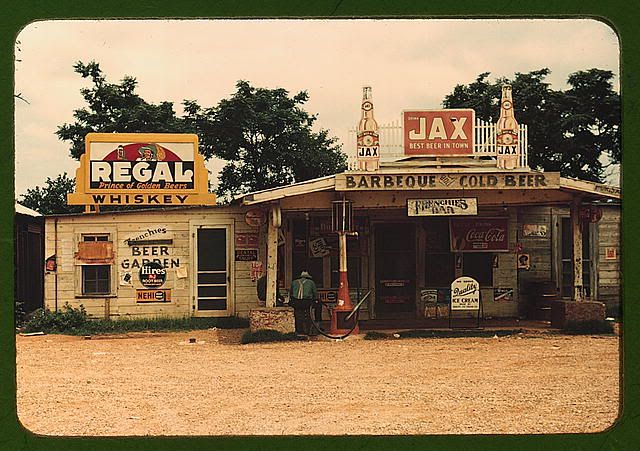
2) In class on Thursday, we will be analyzing the following photograph. You can click the image for a larger view:


For homework, I would like you to jot down some notes about this image, specifically I would like you to make some notes on the technical aspects of the photograph. How are the subjects arranged? Or, stated another way, what are the “vectors of attention” and how do they foster, or gesture towards the rhetorical appeal of logos, ethos, and pathos? Likewise, how does the photograph employ the techniques of framing, cropping, focus, lighting, and coloration (i.e. hue, saturation, and brightness) to produce a particular rhetorical appeal? Remember, the manner in which the photographer composed the text is based upon specific decisions intended to direct and shape the audience’s attention in a particular way. These techniques and their subsequent rhetorical effects are what we want to focus on. For more information about this photograph can be found here (type "a cross roads store, bar" into the search field to get the image).

3) You should also read the following articles found online: 1) regarding cultural differences and vectors of attention, 2) regarding the history of American photography (make sure you click through the the essay's main sections, not just to the orange synopsis), and 3) if you are interested in the photographic essay, the piece on Korea.

WP1: Analyzing Documentary Photography

Option 1

Your first major writing project of the semester will be to conduct a rhetorical analysis of a documentary photograph. As such, your initial step in the process of composition will be to select the image with which you will be working. To find an appropriate photograph, please visit the Compose, Design, Advocate website at www.ablongman.com/wysocki and click on the link for chapter 11. Here you will find sub-links to several sites that store and display digital versions of documentary photographs; peruse these sites until you find one that captures your attention. (If you find an interesting photography somewhere else online that you would like to use, email me the image as an attachment and a link to where you found it.) Once you locate an image you believe to be compelling, save it to your computer or flash drive and type or jot down any information the site offers about it: the name of the photographer, the subject matter, as well as the place and time the picture was taken.

Once you select a photograph and record any salient information about the text, you will perform a cursory analysis. Begin by making some initial inferences about the subject matter. If there are people in the photograph, what relationships might exist between them? What sort of lives do they live? etc. After developing your initial inferences, make some notes on the technical aspects of the photograph. How are the subjects arranged? Or, stated another way, what are the “vectors of attention” and how do they foster, or gesture towards the rhetorical appeal of logos, ethos, and pathos? Likewise, how does the photograph employ the techniques of framing, cropping, focus, lighting, and coloration (i.e. hue, saturation, and brightness) to produce a particular rhetorical appeal? Remember, the manner in which the photographer composed the text is based upon specific decisions intended to direct and shape the audience’s attention in a particular way. These techniques and their subsequent rhetorical effects are what we want to focus on.

After your preliminary analysis, do some research on the historical and cultural context from which the photograph derives. Your research will have a two-fold purpose: 1) it may provide you with new ways of envisioning and interpreting particular aesthetic and technical considerations of the photograph, and 2) it will provide you with material in which you may situate your introduction, conclusion, or possibly both. After you’ve completed your research, return to the photograph and re-examine it. How have your insights altered your perceptions?

Once you have completed these steps, annotating and recording them as you proceed, you will begin crafting these observations into a statement purpose. As Compose Design Advocate mentions, a statement of purpose offers a “clearer and more concrete…sense of purpose, and it explains your purpose by referring to audience and context…[it] should be detailed and specific enough to guide you through the steps of choosing a medium or mix of media, deciding strategies, and then arranging, producing, and testing what you compose” (40). For more information on composing a statement of purpose, reread pages 40-41 and 76-77 in CDA. Furthermore, you might want to reread and think through the statement of purpose model I provided you earlier this semester. Roughly speaking, these documents should be 500-600 words in length.

At this juncture, you should have completed several pre-writing exercises, as well as a statement of purpose. If there appears to be any conceptual incongruencies or problematic ideas, you will want to go back and think through what you have written so as to determine how you could think through these issues in a different manner. It may also be beneficial to visit me during office hours to discuss new strategies and approaches to the material.

With these preliminary steps addressed, you will want to compose a more structured argument. Therefore, your first task will be to ask yourself: what type of overall rhetorical structure best serves my analysis? To determine this, you will want to 1) revisit chapter 7 and look over the types of global patterns used to construct an argument (i.e. syllogism, narrative, problem-solution, etc.), and then 2) ask yourself what type of global patterns can be found in the photograph? Perhaps the most logical manner in which to develop your essay is to synthesize the structure of your writing with the structure of the photograph. For example, on page 349 in CDA there is a photograph of a man standing between two women. He is the focal point of the image, but his engagement with each woman is rather different. Perhaps an effective rhetorical strategy for the overall structure of an analysis of this photograph would be a compare-contrast model, using the two women as oppositional objects.

After you have chosen an appropriate global pattern begin drafting your essay. While you are writing, keep in mind the following rhetorical strategies and techniques from chapter 7:

Have you situated your essay in an informative and compelling manner with a well-crafted introduction? Does your introduction work to forward the audiences’ sense of ethos with regard to you as the writer? How could the historical, cultural, and aesthetic contexts you researched earlier aid in its development?

Have you constructed smaller arguments (both logical and relevant) inside your global argument? What type of reasoning functions best within the context of your essay, inductive or deductive? Furthermore, do the transitions between ideas serve to guide your audience so as to produce fluid and understandable argumentation? What types of transitions would be most helpful in this regard?

As CDA mentions, even attempts to avoid outward gestures toward pathos are a way of managing emotions; have you managed or directed the emotional arguments within your essay well? To wit, conclusions often foster a special relationship with pathos because, at this point, your essay generates a “complex emotional state that works with the more complex thinking” (211) you have developed. Does your conclusion allow your audience to emote in a constructive and acceptable manner? Or does it lack an appropriate appeal to pathos? Does it devolve into bathos (i.e. over emoting or sentimentalizing)?

Hopefully, at this juncture, you have a working draft which you can begin revising. Read over what you have written, preferably out loud. Does it make sense, or are the ideas scattered and confusing? Does it flow smoothly, or do certain portions trip you up? Go back through the essay and rewrite sections that do not meet both cases.

With these steps completed, you should be prepared to participate in peer-reviews. But be forewarned, regardless of how much time you have put into your essay up to this point, you should all be prepared to engage in a global revision process that requires you to make large-scale adjustments and deletions. The week before peer-reviews, I will post a series of questions that each one of you will use when conducting reviews. Not only will these provide you with guidance when examining your fellow students’ essay, but they should also offer you insight into the specific elements of composition, design, and content that I will use when assessing your writing.

Finally, when you post the version of your essay you intend to have graded, you will incorporate a 500 word author’s statement that 1) reflects on your writing process that focuses on the challenges and difficulties you encountered and how you managed to surmount them, and 2) provides a highly specific description of the global revisions you implemented when rewriting for your essay’s final draft, supporting the explanation with salient examples.

The essays specific parameters are as follows: 1200-1500 words (this does not include the statement of purpose or the author’s note), 5 multimedia elements, and 7-10 relevant hyperlinks. Essays should exhibit a clear and comprehensible aesthetic, offering your readers an accessible and professional presentation. DUE: March 6th @ 12:00PM. No late assignments will be accepted.

Attribution of Points (20 total):

Statement of Purpose: 2 points
Peer-reviews: 4 points
Author’s Note: 2 points
Final Draft: 12 points

Option 2

You may also choose to create a photographic essay consisting of 10-12 edited photographs that you captured yourself. The basic outline for the project be found on page 379 in CDA, but I will also require you to write a 1000 word artist’s statement that addresses the specific aesthetic decisions you made with regard to shooting the images and editing them, as well as how they manifest themselves rhetorically. Furthermore, you will need to provide a series of salient and informative captions for the photographs you incorporate into the essay. If this option sounds appealing to you, the two of us will need to meet during my office hours to discuss more specific parameters of the assignment and how best to carry them out. This meeting is not optional. If you decide to work on WP1, Option 2 and do not meet with me, you will not receive credit for this project. DUE: March 6th @ 12:00PM. No late assignments will be accepted.

Thursday, February 4, 2010

WP1 Pre-Writing Assignment 1

READING: For Tuesday's class, read chapter 11 in Compose Design Advocate. This chapter builds off chapter 9, further developing concepts of visual rhetoric within the more specified framework of documentary photography.

WRITING: Write a 300-500 word post that reflects upon your experience with, knowledge of, or interest in photography. If you don't have any of these three, explain why you don't (in detail) and address what possible concerns or questions you might have about the genre as we embark on our first major writing assignment. Include with this post should be 2 hyperlinks and 1 multimedia element. DUE: Tuesday, February 09 @ 10:30AM.

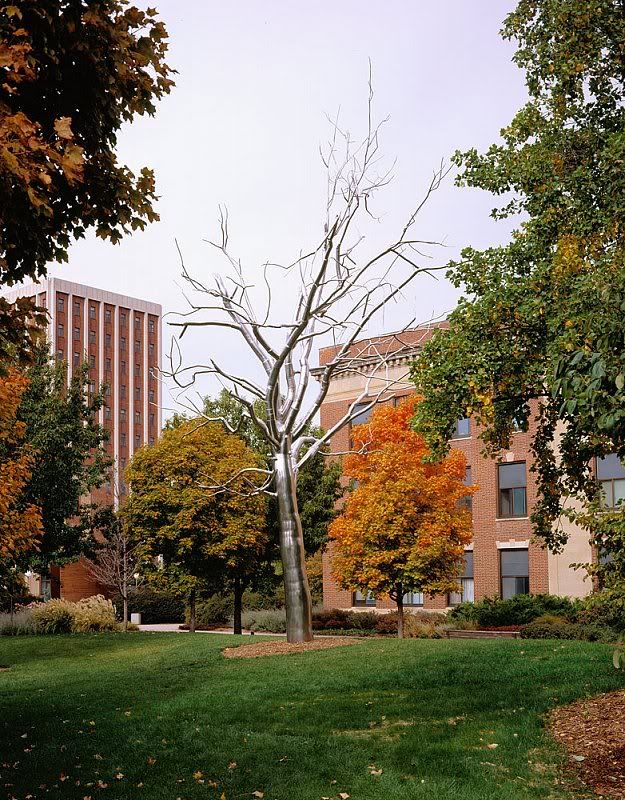
MODELING: Finally, I modeled an example of a micro-rhetorical analysis based upon Roxy Paine's sculpture Breach, which is located outside of Andrews Hall. Take note of the manner that the model a) engages the terms from CDA, b) provides specific examples of how those terms relate to Breach, c) situates the analysis within a particular context via the introduction and conclusion, and d) directly connects that context to the specific, rhetorical concepts that are addressed.

Located outside of Andrews Hall and standing 42-feet high is Roxy's Paine's Breach. Originally commissioned by the University of Nebraska's Sheldon Museum of Art, the stainless steel sculpture functions as a catalyst that challenges us to question our traditional understanding of the division between the "natural" world and the "synthetic" world. But, if this is indeed one manner in which we can conceptualize the piece, how does the object itself stimulate such thoughts? Or stated in other words: what rhetorical strategies does the object activate or deploy so as to lead us to question preconceived binaries we have constructed?

The most evident structural arrangement (i.e. instance of logos), no doubt, is that of juxtaposition, or the technique "that ask[s] us to compare...two very different situations or conditions before our attentions so that we can feel the jangly and often disturbing differences" (Wysocki and Lynch 94). In this case, obviously, the difference between Breach and the other trees around it is the choice of materials. While as previously mentioned, Breach is constructed of stainless steel, the surrounding trees are constructed of what one would consider "traditional" tree materials: heartwood, sapwood, cambium, inner bark, outer bark, etc. At first blush, it would seem the juxtaposition reinforces the static organic-synthetic binary. But another moment of logos, specifically the manner in which logos is implemented as word play, forces us to reconsider the binary structure; as Compose Design Adovcate mentions, titles "can begin the process of getting the audience in the mood, they can make a comment on what is to come, or they can begin the work of arguing by challenging the audience's expectations" (206). Paine's title, Breach, does just that.

To breach means to break or rupture a surface; indeed Breach ruptures the aesthetic landscape of UNL's campus green through its difference of color, tactile feel, choice of material, and inability to produce and shed seasonal leaves. All these factors call attention to its construction. But it also breaches our consciousness because the sculpture compels us to ask: why is this object here? what purpose does it serve? what was the artist attempting to convey to the audience? how is it similar or different from the plant-life around it? Only then do we realize that, perhaps, Breach has much more in common with the "natural" organisms around it than we might first believe.

For starters, the "natural" elements in the same area aren't exactly "natural," in that they have been trimmed (or "sculpted") with branch clippers and isolated from the surrounding grasses with perfectly symmetrical rings of mulch. But this is only the first and most superficial "synthetic" occurrence with regard to these "natural" objects. In fact, before human intervention, trees rarely grew on the Great Plains; the majority of organic matter was a variety of tallgrass and medium grasses. Once the central plains became inhabited by less nomadic peoples, grasses were remove and replaced with agriculture (i.e. corn, etc.) and a variety of non-indigenous tree life intended to "beautify" the region. The scattered forestry that one finds throughout the Great Plains, then, is far from "natural." And this is to say nothing of the genetically engineered plants that now dominate the agribusiness and find a home in states such as Nebraska.

Tuesday, February 2, 2010

UPDATE: 02.02.10

WRITING: For your next blogging assignment, you will once again return to the video you previously selected and analyze the rhetorical appeals therein. This time around, begin with structural logos as describe in chapter 9 of CDA. How is the video constructed and what are the a/effects of that construction? Afterward, demonstrate how that particular arrangement, vis-a-vis logos, aides in the development of a specific argument, as well as in the formulation of ethos and pathos. Basically, I am asking you to more thoroughly investigate your chosen video in the manner. Posts should be 400-500 words in length, contain 1 image, and 2 hyperlinks. DUE: Thursday, February 04 @ 10:30AM.

READING:
In Compose Design Advocate, read the remainder of chapter 9, pages 285-304.

Thursday, January 28, 2010

UPDATE: 01.28.10

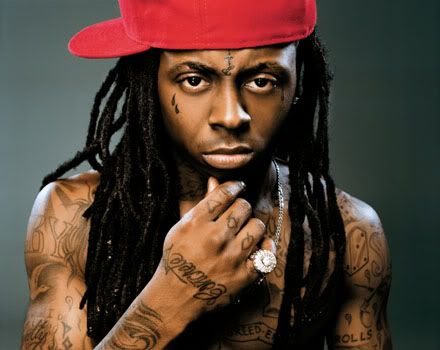
1) For your fifth blog post, you will write a 300-500 word response to the video you selected for your fourth, context-centered post that will focus on the rhetorical strategies of logos, pathos, and ethos. As I mentioned in class, you will not be able to adequately cover all three, nor every instance of even a single appeal. As such, I would like to develop one particular moment in the video that works with one or two of these rhetorical devices, using specific examples from the video to support your claim. In addition to the word count, please incorporate one image (not video) and two hyperlinks. Below, I have included an example the uses the Jay-Z video we discussed in class. DUE: Tuesday, February 2 @ 1o:30AM:

Toward the latter half of the "D.O.A. (Death of Auto-Tune)" video, Jay-Z sings: "Hold up, this s--t need a verse from Jeezy,/ I might send this to the mix-tape Weezy"; one verse later, he names drops yet again: "Get back to rap you're T-Pain'n too much." Given the title of the song, and the fact that all three of the aforementioned performers utilize Auto-Tune, Jay-Z constructs a binary relationship between himself and those men he invokes in his lyrics. The comparative structure he employs, or this moment of logos within the text, asks the viewer/listener of the video to contrast the aesthetic approaches of these men, as well as their underlying assumptions about what makes "good" music, or perhaps even more critically, what one should consider valid "artistic" expression.

But the implications of incorporating proper names into the lyrics of "D.O.A." extend beyond arrangement and structure. By mentioning Lil' Wayne, T-Pain, and Young Jeezy, Jay-Z elicits, or attempts to elicit, an emotional response (i.e. pathos) from his audience. To further explain: if a listener, for example, enjoys the music of these Auto-Tuned singers and believes it fosters a certain connection with his/her own life and experiences, then the fact that Jay-Z criticizes their musical approaches may anger or displease that particular audience member (and this is to say nothing of the reactions the three performers themselves might have with this song). Likewise, if a listener feels "turned-off" by the slick production techniques that have recently dominated the airwaves, then most likely, he/she will feel that "D.O.A." validates their disdain for such songs. Furthermore, the latter of these two types of listeners may also find it humorous that an iconic cultural figure such as Jay-Z skewers these performers in such an overt manner.

Of course, invoking the proper names of these three singers also enacts the rhetorical strategy of ethos. In Composition Design Advocate, the authors state that ethos can be constructed through "borrow[ing] authority...from"(192) an outside source. As the comparative structure of the lyrics display, ethos can also be constructed through contrasting one's authority with the "authority" of an outside source. The names "Weezy" and "T-Pain" carry with them pre-established notions of character and credibility. Based on one's relationship to those notions, this could be either a positive or negative association. But the point, at least within context of ethos, is that these names are known and contain ready-made associations for the listener. To a certain extent, by attacking the character of these signer, Jay-Z employs a form of ad hominem argumentation.

2) In CDA, please read pages 263-278, 285-294, and 301-304.

Tuesday, January 26, 2010

UPDATE: 01.26.10

1) For your fourth blog post, you will write 300-500 words about a particular music video's context or contexts. In addition to the word count, you will embed the video into the post and incorporate at least two relevant hyperlinks. DUE: January 28 @ 10:30AM.

Below is a brief analysis of Jay-Z's "D.O.A. (Death of Auto-Tune)" and the manner in which it engages particular contexts. If it helps, you may use this as a general model for your own analysis. As you will discover, the analysis ends with some broad, unsubstantiated claims. But, as you will be doing with your video, consider the context. At 300-500 words, we do not have the space to necessarily prove everyone of our charges, but they at least should be plausible and appropriately integrated into the fabric of our writing. When we write our longer, full-length projects, these will be issues that will need to be further explored.


While, no doubt, Jay-Z's "D.O.A. (Death of Auto-Tune)" may be read through the lens of many different contexts, entering the text through a literary context can be quite beneficial. Specifically, the song employs the elegiac form (i.e. the elegy), which is a poetic sub-genre that tends to "be sad or melancholy" while simultaneously considering "the meaning of death and seek[ing] some sort of consolation" (Addonizio and Laux 41). Of course, the tone of Jay-Z's elegy is far from "melancholy"; in fact, when he sings "This is death of Auto-Tune/ a moment of silence," one cannot take these words as anything but satirical when they follow such lines as "This is anti-Auto-Tune/ death of the ring tone,/ This ain't for iTunes/ this ain't for sing-a-long." Not only does Jay-Z clearly state that his song is "anti-Auto-Tune," but he also ridicules many of the contemporary technologies surrounding today's mainstream music scene by associating them with the pitch-correcting program. But the aforementioned satire found within the video appears to alter the traditional tenets of the elegy; or, we could say Jay-Z undermines our expectations for this particular context, so as to skewer those hip-(h/p)op stars that rely on Auto-Tune when creating and producing their music.

But why would Jay-Z take aim at these "singers"? Why would he find the need to level an argument against performers such as T-Pain and Weezy (aka Lil' Wayne) that have "processed" their way to celebrity status? To answer this question, one must look more closely at what Auto-Tune actually does by shifting to a technological context. The program enables performers to digitally "correct" portions of their vocal track so that it will be pitched at the same frequency as the instrumental tracks. This, ultimately, has two major ramifications: 1) the voice one hears in an Auto-Tuned song is not the singer's "authentic" voice, and 2) pitch correction homogenizes vocal tracks so that voices that were initially disparate become rather similar to one another. While the "authenticity game" played by Jay-Z can lead to many problems (not just in the world of popular culture, but also in the academic world), he rightly concerns himself with the negation of difference and the manner in which such practices can lead to not just a less vibrant culture and society, but to the oppression and domination of marginalized groups in all areas of life.

Works Cited

Addonizio, Kim and Dorianne Laux. The Poet's Companion: A Guide to the Pleasures of Writing Poetry. New York, NY: W.W. Norton & Company, 1997.

2) Come prepared for Thursday's class session to discuss the types of rhetorical strategies and appeals at work in the video we discussed in class. Specifically, I would like us to focus on ethos, pathos, and logos. CDA covers these terms in chapter 4 and at greater length in chapter 7.

Thursday, January 21, 2010

CONFERENCE SCHEDULE

25 Jan 2010 (Monday): Nina 10:20AM, Ian 10:40AM, Ruth 11:00AM, Ben H 11:20AM, Kelli 11:40AM, Jamie 12:00PM, Erin 1:40PM, John 2:40PM, and Sarah 3:00PM.

26 Jan 2010 (Tuesday): Joey 2:00PM and Ben S 2:40PM.

27 Jan 2010 (Wednesday): James 12:20PM, Bryan 1:00PM, Cara 1:40PM, and Hannah 2:00PM.

28 Jan 2010 (Thursday): Amberley 1:00PM, Ellie 1:20PM, and Blake 1:40PM.