1) For your fifth blog post, you will write a 300-500 word response to the video you selected for your fourth, context-centered post that will focus on the rhetorical strategies of logos, pathos, and ethos. As I mentioned in class, you will not be able to adequately cover all three, nor every instance of even a single appeal. As such, I would like to develop one particular moment in the video that works with one or two of these rhetorical devices, using specific examples from the video to support your claim. In addition to the word count, please incorporate one image (not video) and two hyperlinks. Below, I have included an example the uses the Jay-Z video we discussed in class. DUE: Tuesday, February 2 @ 1o:30AM:
 Toward the latter half of the "D.O.A. (Death of Auto-Tune)" video, Jay-Z sings: "Hold up, this s--t need a verse from Jeezy,/ I might send this to the mix-tape Weezy"; one verse later, he names drops yet again: "Get back to rap you're T-Pain'n too much." Given the title of the song, and the fact that all three of the aforementioned performers utilize Auto-Tune, Jay-Z constructs a binary relationship between himself and those men he invokes in his lyrics. The comparative structure he employs, or this moment of logos within the text, asks the viewer/listener of the video to contrast the aesthetic approaches of these men, as well as their underlying assumptions about what makes "good" music, or perhaps even more critically, what one should consider valid "artistic" expression.
But the implications of incorporating proper names into the lyrics of "D.O.A." extend beyond arrangement and structure. By mentioning Lil' Wayne, T-Pain, and Young Jeezy, Jay-Z elicits, or attempts to elicit, an emotional response (i.e. pathos) from his audience. To further explain: if a listener, for example, enjoys the music of these Auto-Tuned singers and believes it fosters a certain connection with his/her own life and experiences, then the fact that Jay-Z criticizes their musical approaches may anger or displease that particular audience member (and this is to say nothing of the reactions the three performers themselves might have with this song). Likewise, if a listener feels "turned-off" by the slick production techniques that have recently dominated the airwaves, then most likely, he/she will feel that "D.O.A." validates their disdain for such songs. Furthermore, the latter of these two types of listeners may also find it humorous that an iconic cultural figure such as Jay-Z skewers these performers in such an overt manner.
Of course, invoking the proper names of these three singers also enacts the rhetorical strategy of ethos. In Composition Design Advocate, the authors state that ethos can be constructed through "borrow[ing] authority...from"(192) an outside source. As the comparative structure of the lyrics display, ethos can also be constructed through contrasting one's authority with the "authority" of an outside source. The names "Weezy" and "T-Pain" carry with them pre-established notions of character and credibility. Based on one's relationship to those notions, this could be either a positive or negative association. But the point, at least within context of ethos, is that these names are known and contain ready-made associations for the listener. To a certain extent, by attacking the character of these signer, Jay-Z employs a form of ad hominem argumentation.
2) In CDA, please read pages 263-278, 285-294, and 301-304.
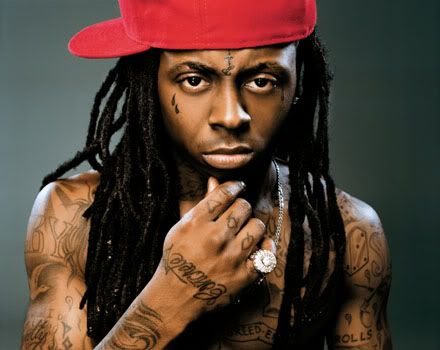 Toward the latter half of the "D.O.A. (Death of Auto-Tune)" video, Jay-Z sings: "Hold up, this s--t need a verse from Jeezy,/ I might send this to the mix-tape Weezy"; one verse later, he names drops yet again: "Get back to rap you're T-Pain'n too much." Given the title of the song, and the fact that all three of the aforementioned performers utilize Auto-Tune, Jay-Z constructs a binary relationship between himself and those men he invokes in his lyrics. The comparative structure he employs, or this moment of logos within the text, asks the viewer/listener of the video to contrast the aesthetic approaches of these men, as well as their underlying assumptions about what makes "good" music, or perhaps even more critically, what one should consider valid "artistic" expression.
But the implications of incorporating proper names into the lyrics of "D.O.A." extend beyond arrangement and structure. By mentioning Lil' Wayne, T-Pain, and Young Jeezy, Jay-Z elicits, or attempts to elicit, an emotional response (i.e. pathos) from his audience. To further explain: if a listener, for example, enjoys the music of these Auto-Tuned singers and believes it fosters a certain connection with his/her own life and experiences, then the fact that Jay-Z criticizes their musical approaches may anger or displease that particular audience member (and this is to say nothing of the reactions the three performers themselves might have with this song). Likewise, if a listener feels "turned-off" by the slick production techniques that have recently dominated the airwaves, then most likely, he/she will feel that "D.O.A." validates their disdain for such songs. Furthermore, the latter of these two types of listeners may also find it humorous that an iconic cultural figure such as Jay-Z skewers these performers in such an overt manner.
Of course, invoking the proper names of these three singers also enacts the rhetorical strategy of ethos. In Composition Design Advocate, the authors state that ethos can be constructed through "borrow[ing] authority...from"(192) an outside source. As the comparative structure of the lyrics display, ethos can also be constructed through contrasting one's authority with the "authority" of an outside source. The names "Weezy" and "T-Pain" carry with them pre-established notions of character and credibility. Based on one's relationship to those notions, this could be either a positive or negative association. But the point, at least within context of ethos, is that these names are known and contain ready-made associations for the listener. To a certain extent, by attacking the character of these signer, Jay-Z employs a form of ad hominem argumentation.
2) In CDA, please read pages 263-278, 285-294, and 301-304.
